Two Founders.
$2M Nobody
Wanted to Give.
Now $11B.
Five rounds in four years. Two high-school friends from Warsaw who struggled to raise their pre-seed, then built the most valuable AI voice company on earth. This is the full story of what happened at each stage, and what most founders would miss.
Get the Teardown
Enter your details and the full breakdown unlocks instantly below.
ElevenLabs
$11B
In Four Years.
I wasn't in the room. But after 13 years on both sides of the table, I can tell you exactly what happened at each stage, what the founders got right early, and what most people looking at this story from the outside completely miss.
By Gian Seehra, Ex Tier-1 VC. VC-backed founder. 120+ raises. $250M+ raised.
One from Palantir. One from Google's machine learning team.
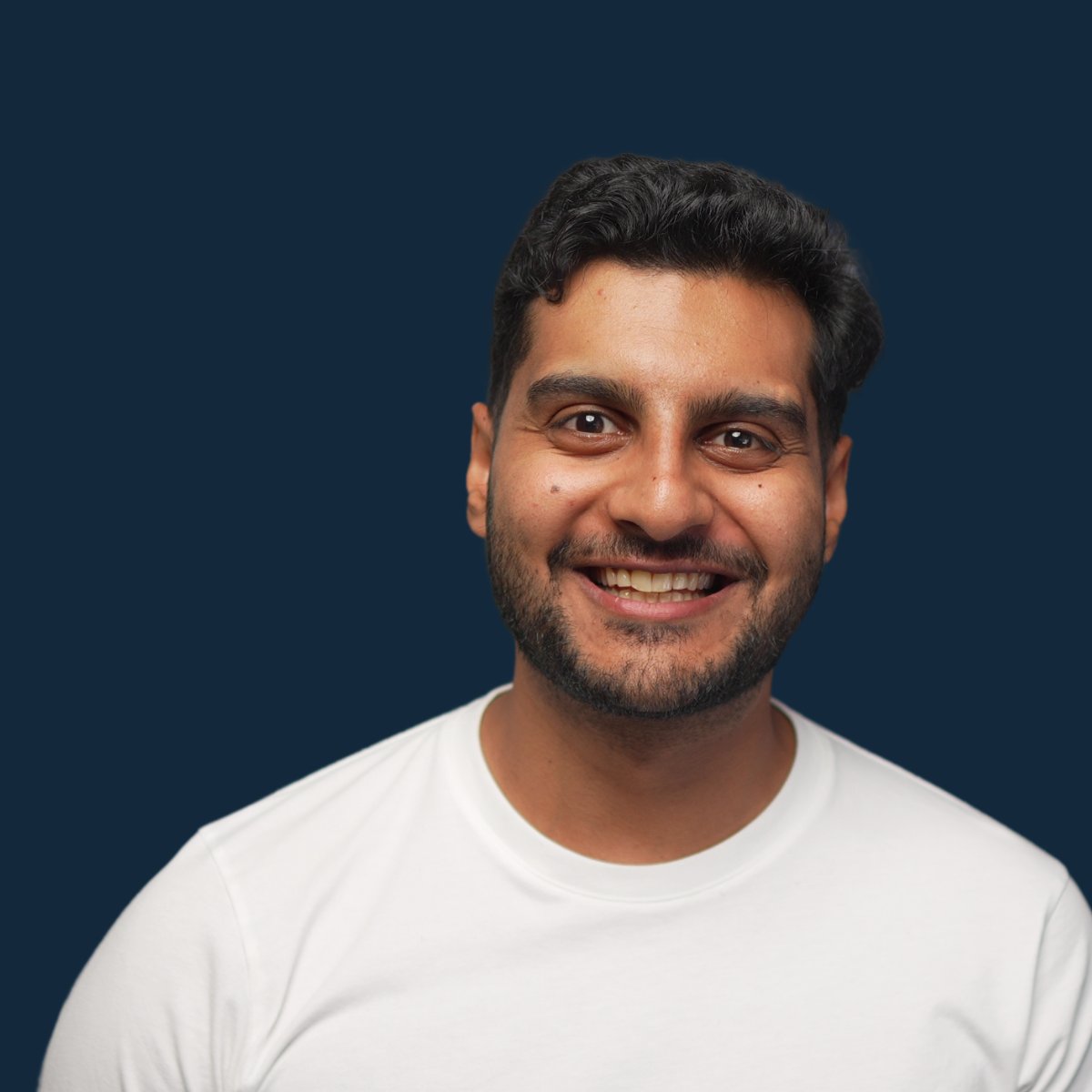
Mati Staniszewski and Piotr Dabkowski grew up together in Poland. They bonded over a shared frustration: watching badly dubbed Hollywood films where the voices never matched the actors. It sounds trivial. It wasn't. That frustration became the founding insight for an $11 billion company.
But the founding insight alone wouldn't have raised a single dollar. What mattered at pre-seed was who they were when they walked into those meetings.
Mati had worked at Palantir, one of the most selective hiring bars in tech. Piotr was a machine learning engineer at Google, working on the exact technical domain they were building in. These aren't just good CVs. They're signal. At pre-seed, when you have no revenue and no product in market, your credentials are the entire risk assessment.
they struggled to close $2M.
ElevenLabs was founded in April 2022. By January 2023, they'd raised a $2M pre-seed from Credo Ventures and Concept Ventures. On paper that sounds clean. In reality, it was a grind.
Two Polish founders, no US network, building in a space, AI voice synthesis, that most investors in early 2022 still considered niche. Remember: ChatGPT hadn't launched yet. The AI hype cycle hadn't started. They were pitching voice AI to investors who didn't yet believe AI was a platform shift.
The pre-seed closed with two European VCs. Not a16z. Not Sequoia. Not any of the names that would show up later. That's normal. And that's the part of this story most founders need to hear.
They spent it building.
After closing the pre-seed, Mati and Piotr made a decision that most first-time founders get wrong. They didn't immediately start working on the Series A. They didn't split their time between investor meetings and product work. They went heads-down and built.
For roughly 12 months, the entire team, about 8 people, focused on one thing: making the voice synthesis models as good as they could possibly be. No press tours. No conference circuits. No premature fundraising conversations.
Then, in January 2023, they launched a public beta. And the internet found them.
a16z came to them.
By mid-2023, ElevenLabs wasn't looking for investors. Investors were looking for ElevenLabs. The product had gone viral. The user growth was exponential. And the angel list that materialised reads like a who's-who of tech:
Nat Friedman (former GitHub CEO), Daniel Gross (Y Combinator partner, AI investor), Mike Krieger (Instagram co-founder), Brendan Iribe (Oculus co-founder), Mustafa Suleyman (DeepMind co-founder). These aren't cheque-writers. These are the people who built the platforms the last generation ran on.
When your angel list looks like that, every VC in the market pays attention. Not because of the money, $19M is a normal Series A. Because of what those names signal: the smartest people in AI looked at this company and decided to put their personal capital in.
in twenty-five months.
Once the Series A closed, ElevenLabs entered a different phase. The early-stage grind was over. What followed was pure execution and scale.
The later rounds are impressive. But they're not where the real lessons are. By the time you're raising a Series B at a billion-dollar valuation, the fundraise is driven by numbers, not narrative. The decisions that created this outcome were all made in the first 18 months.
If 100 founders studied this story and tried to extract the lessons, here are the three things most of them would get wrong.
But the early decisions determined all of it.
ElevenLabs didn't raise $781M because they were in the right place at the right time.
They raised because two founders with strong credentials went heads-down building for a year, created a product so good it went viral on its own, and then let the traction do the fundraising for them. The early rounds were hard. The later rounds were inevitable, because of what they did when nobody was watching.
Your raise works the same way. The question isn't whether you can replicate the $11B outcome. It's whether you're making the same early-stage decisions, focusing on building something undeniable, running a volume-based process when you have no leverage, and not splitting your attention between fundraising and the product.